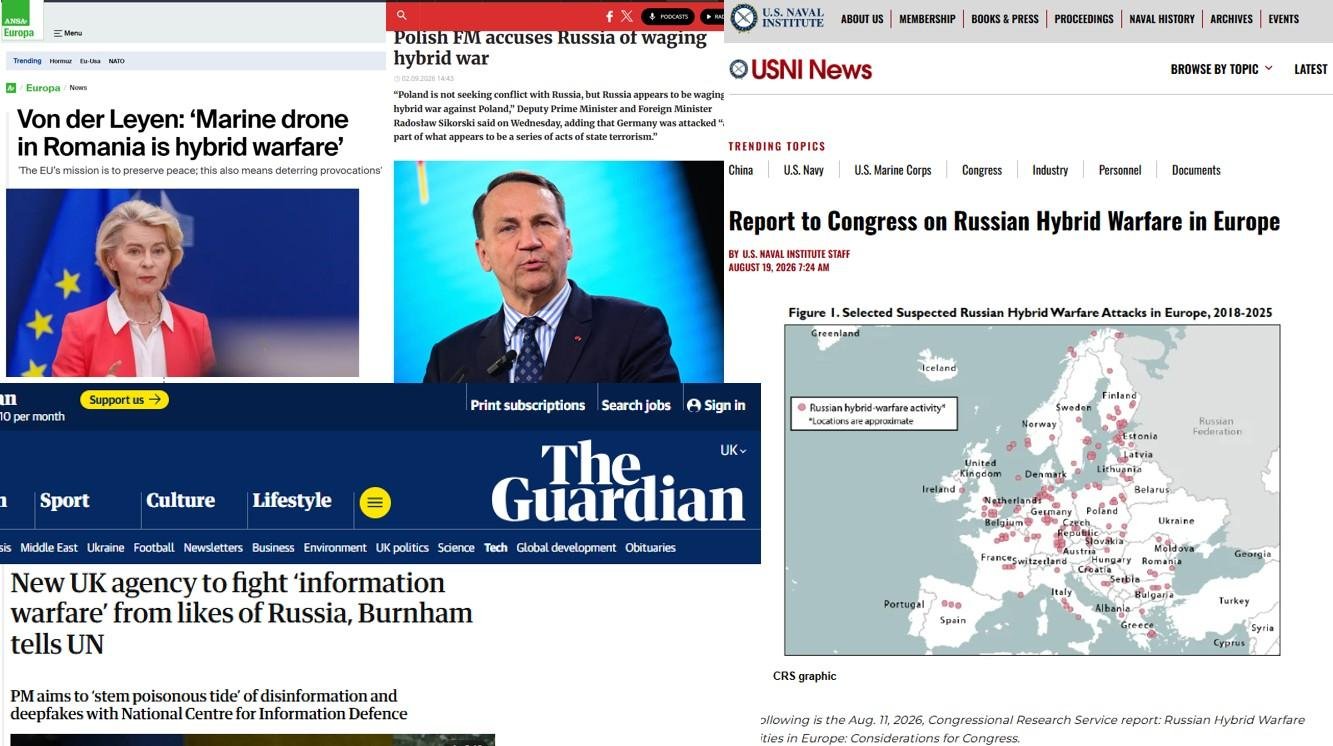
There is clearly a narrative at the moment for raising public awareness of the hybrid warfare threat to European infrastructure. In recent weeks there have been public announcements by several European leaders including Macron, Merz, Burnham, Tusk and Rutte to name just a few.
A key tenet of defence is deterrence. Saying ‘I see you’ to Putin and others is a start, though there are few red lines being drawn yet.
For those still unfamiliar with the term, ‘hybrid warfare’ is characterized by the European Center of Excellence for Countering Hybrid Threats (www.hybridcoe.fi) as;
- Coordinated and synchronised action that deliberately targets democratic states.
- Activities that exploit the thresholds of detection and attribution.
- Activities designed to further the agents strategic goals while undermining and / or hurting the target.
(I have abbreviated slightly so do check out their website for much more!)
If you look through those lenses, it’s hard to miss the impact of what’s happening on the ground.
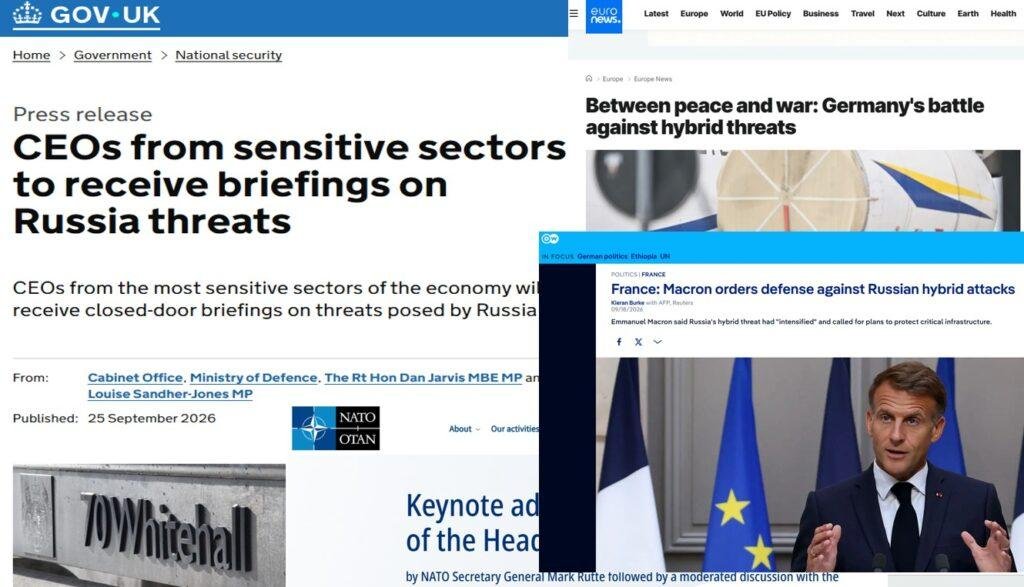
Hybrid warfare attacks across Europe
There are daily news stories of sabotage, arson, anchor drags, airspace violations and cyber-attacks to name but a few. If you look at the data though, there are a couple of key themes.
Ukraine Nexus
A large proportion of the incidents on European soil this year are against infrastructure that is supporting the fight by Ukraine against Russia. The threat manifests as arson in industrial buildings, threats to CEO’s of specific companies, and the funding of anarchists and activists. These target sets reduce the capability of Ukraine or the political will to support them.
Critical Infrastructure
The next group of incidents are against energy infrastructure. Whether that’s pipelines, storage, or electricity sub-stations which are ultimately providing power to other critical infrastructure. Currently, with supply chains tight, incidents that might otherwise have had an imperceptible impact are amplified. We see that in product availability, prices and of course inflation. These target sets create dissatisfaction amongst the European citizenship, and sew discord.
The Cyber Domain
Cyber attacks are having a material impact, not only in the short term, but in the longer term too. Look at the results a year on for the likes of Jaguar Landrover for example. Huge loss of reputation, tens of thousand of jobs lost, market share plummeting and supply chain bankruptcies. It’s a stretch of course to lay the blame on a different nation state, but someone further East is certainly benefiting from JLR’s misfortune. This type of target set impacts long term manufacturing capability.
Surveillance
There is clear intent and capability for hostile foreign states to conduct surveillance, in order to prepare for future attacks, or even war. Just look at the Yantar and other Russian spy ships that are plodding their way around the North sea. These targets enable future hostile operations.
Now don’t get me wrong, this doesn’t mean that there are hordes of foreign spies traipsing across our green and pleasant lands, but there are some. It leads to an interesting thought though, and that is; Who is actually doing it, down at the individual level, on behalf of those hostile foreign states?
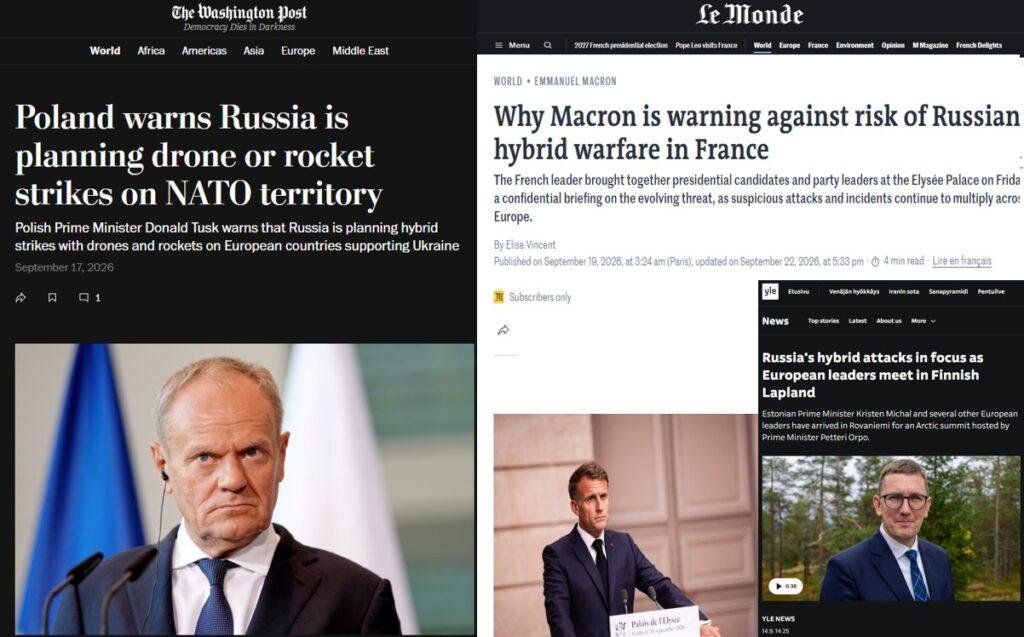
Who are the actual perpetrators of this hybrid warfare?
Criminals.
In crime science theory, criminal motivations are traditionally material gain, need, and or the thrill of it. The payment of criminals by hostile foreign states is an easy way to sew discord and disruption across a wide areas. Of course, the level or professionalism may be much lower than organised crime gangs, which I will come to in a moment, but if a foreign state requires relatively unskilled tasks like taking photos, threatening people or even setting fire to things, then a petty criminal may be your answer.
Organised crime gangs.
Stepping criminality up a notch or two, your OCG’s are exactly that. Organised, coordinated, more professional and likely better funded. A campaign of ‘hobbyist’ drone usage against airports, is a nuisance (and costs the aviation sector hundreds of millions.) Coordinated cyber-attacks are a deep technical skill. Finding the leaders of companies that manufacture components for Ukraine’s military and threatening them and their families has organised crime written all over it.
Terrorists.
There are a number of proscribed groups across Europe who receive their funding from states that are unfriendly to the West. They are useful proxies to conduct below threshold attacks. Terrorists tend to have had training and a higher level of capability when you begin to look at attack vectors that use explosives. Drones carrying IED’s are a level above even organised crime. Though as we saw with Leipzig they are not always successful. Assuming of course that they meant to be and it wasn’t just a warning. Bringing down an airliner has been done before by the Russians though, so they probably still see that as below-threshold.
Professional Agents.
You have to go back to 2018 to remember the Skripal poisoning in the UK. That was certainly Russian agents, and it resulted in an escalating tit for tat of expulsions of ‘diplomats’ on all sides. These days, I suspect that professional agents are doing slightly less of the wet work, and more of what they do best. Running networks of informers, criminals, activists and ideologues. A little money here, the stroke of a feather or two there, extortion, threats. All the tools of the trade.
Idealogues.
There are those who, for personal beliefs, will happily undertake activities on behalf of an organisation, culture or country in which they feel they belong. The majority of idealogues wont dive straight into criminal activity or acts of terrorism, but there are plenty that will happily act as a cut out, take photographs, or feed insider information about a site or technology.
The Coerced.
With the arrival in Europe of so many young men from Russia, China and Iran, all of whom may legitimately be fleeing hardship, there is a problem. Behind them are families and loved ones that the state can and does use to coerce the newly arrived individual to commit criminal acts.
Activists.
There have always been anarchists and activists, and they are two very different things. However, when supported by foreign funding there is a major hybrid warfare objective. In the 2018 work, Russian ‘Hybrid Warfare’: Resurgence and Politicisation, Fridman showed that Hostile actors seek to manipulate the political orientation of the target state’s population. Genuine social activists are leveraged to turn everyday political discourse into hyper-polarized warfare.
You’ve probably seen this yourself. Why has the local village hall fundraiser now attracted strong, and sometimes controversial voices on the great debates of our age? How on earth has a fun run become politicised? Those who feel uncomfortable with opposing political views may just choose the easy option and step back from participating. And that allows more space for those on the ‘far’ side of any debate.
What a dream for those hostile foreign states, who can sew discord and disillusionment and who can continue to deny involvement completely.
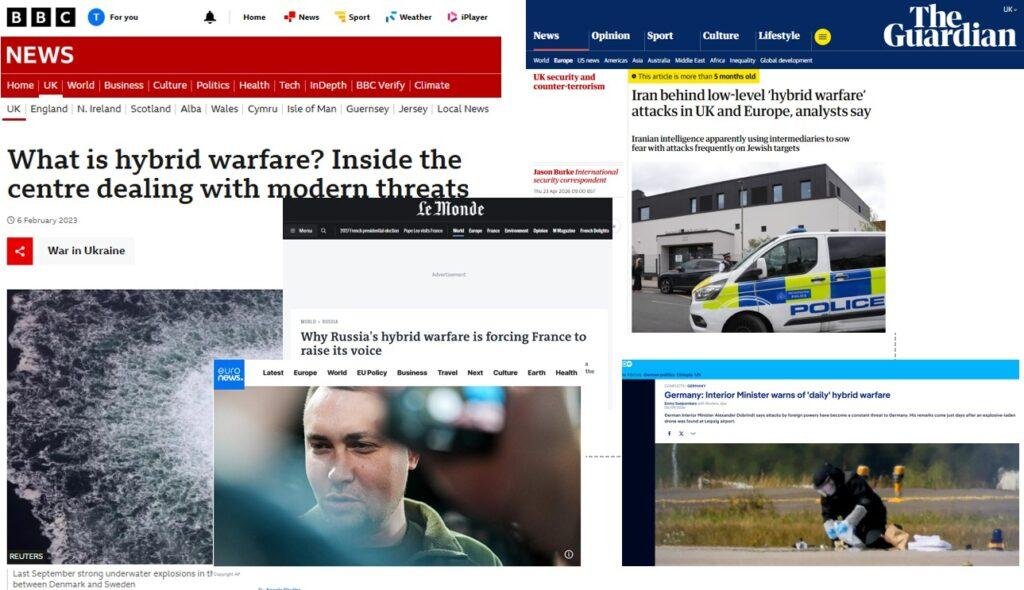
How are these hybrid warfare threat actors linked?
There is one thread that can pull all of those together. Mercenaries. They are the ultimate proxy. It was not so long ago that the likes of Wagner group were front and center in our minds as the leading private military proxy for Putin’s government.
Many of course perished in Ukraine, some moved to the state controlled Africa Corps, but I suspect that the rest, and others like them are in Europe.
Do you remember when Russia was offering full pardons to hardcore criminals if they went to the front line or joined Wagner group? I would offer that for those that survived, considerable numbers of them are now at large and on a long leash.
Freedom of movement in Europe allows well trained, paid, motivated and coordinated individuals to pursue agendas of petty crime, organised crime, terrorism, activism and ideological recruitment. That covers all of the threat actors mentioned above, except of course for the professional agents.
The key question is what can be done about it. – it’s not an easy answer, and so that will be a topic for my next article.
If you enjoyed this one, and would like to learn more, do please share and subscribe. https://robphayre.com/rob-phayres-blog/
About Rob Phayre
Reepaman is the nom de guerre of Rob Phayre, a security and crisis manager with 20+ years of experience. Rob is the author of 7 books, a public speaker, and a guest lecturer at one of the UK’s leading universities. www.robphayre.com