Are Travel Apps a False Comfort?
Do travel risk management Apps give you a false comfort as a risk manager? – I believe they can do.
Outside Influences
What good is your travel risk management App if the Government pulls the plug on the telecoms infrastructure?
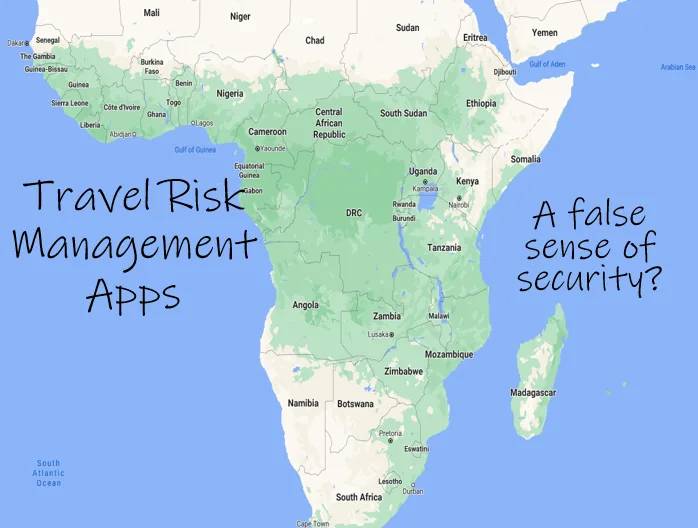
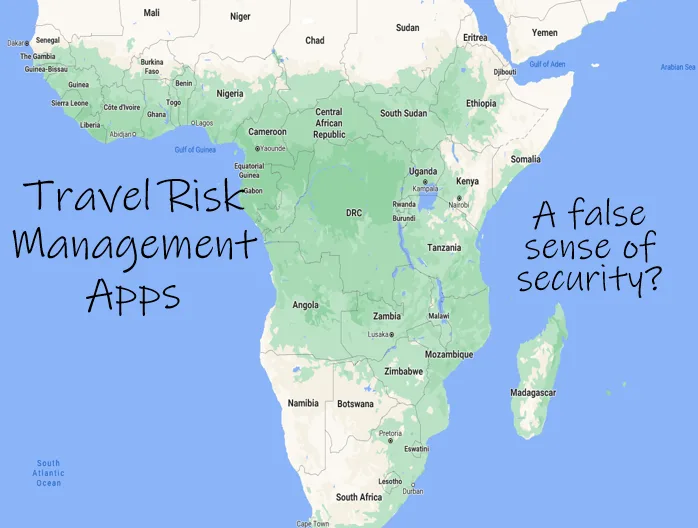
Over the past year in Africa we have seen governments consistently shutting down mobile comms, mobile internet and even landline internet and international telecoms in the event of a major incident. This often happens with no notice. There are several reasons why they might do this, but recently a lot of them have centred around limiting social media spreading of both information and mis-information. Media outlets are throttled and insurgents or opposition parties lose the ability to communicate. Whatever the reason, it’s the other individuals in the area that lose the ability to communicate, get cut off and as a result can become more exposed to any danger.
Look at Cabo Delgado in Northern Mozambique right now. How about Uganda and Tanzania during the last elections. Look at targeted disruptions in Ethiopia during the Tigray crisis, and finally, the recent tragedy in Afghanistan. In all of these incidents not only are the at risk individuals desperately trying to get a message out, but support teams are trying to get messages and help in.
A travel risk management app, has its place during the planning phase perhaps, advising travellers on the potential risks. But, corporations and individuals are kidding themselves if they think that an App is really going to help in the event of a major crisis. Sure, it can be one of the response mechanisms, but organisations that rely solely on that as an option, feeling that they have fulfilled their duty of care as a result would in my mind simply be negligent.
Emergency Response
Are you really going to depend on an app or a mobile phone for a medevac? Can you get through to the ‘global response centre’ from a mobile phone? How are you getting your alerts and updates if the internet is shut down? That emergency response vehicle from a third party contractor that’s based in the Capital city 1000 KM from the scene really is not going to hit any meaningful response times. That very fancy real time active tracking system in your pocket fails along with your ‘mobile panic button’. – Unless of course it’s satellite based.
Travel Risk Management needs a much deeper approach, especially when you work in new frontiers, in countries where you may not have any other support mechanisms and when you are really remote.
What do effective travel risk management mitigations look like?
Consider;
- Satellite Phones, with data (where legally permitted.)
- Satellite trackers.
- In country security consultancy support.
- Vetted transportation providers.
- Trusted local contacts / project partners.
- Local security risk management analysis both pre-trip and providing alerts during the visit through reliable comms platforms.
- Pre-deployment risk assessments – Do you really need to go? And do you really need a team of 5 to go?
- Pre-deployment travel risk advice specific to the environment and the type of visit or project.
- Pre-deployment face to face training including multi-day High Risk Environment Awareness Training for those with extensive exposure to the environment.
- Accurate Journey Management Processes including active check in’s.
- 24 Hour emergency response telephone numbers, with redundancies.
- A response methodology, whether medevac or security which has appropriate secondary communications systems.
Employee considerations in Travel Risk Management
But without doubt, given the long list above, training staff before they deploy has to be one of the priorities. I am not talking about a one hour online module as a tick box exercise. Depending on the exposure for the individuals and the risk, there must be a mechanism for practical face to face training. That training needs to be theatre specific. Why train for kidnap for ransom, if you as a traveller are going to face a civil unrest risk.
Most importantly, employees must feel confident traveling. Those that are savvy enough to not be conducting ‘business tourism’ will understand that the travel should only be done when absolutely required. Line managers need to be firm and also challenge the need for the additional exposure. If the travel simply has to happen, then the traveller has to feel that they are sufficiently prepared to be able to solve any problems on their own! Its the travellers life, so empower them to solve the problem, or at least not make any major mistakes in the event that no immediate support can come from elsewhere if all comms go down.
An individual needs to know when to stand fast in place, or when to run. The traveller must also have sufficient confidence to able to turn around and say ‘No! This isn’t safe,’ and the organisation that they work for needs to support them in that decision.
Challenge the status quo.
If your organisation thinks that the above is too much in terms of time and resources, then you have to challenge whether the organisation should be considering operating in that environment in the first place.
Luckily for me, I work for one of the best organisations in the world now when it comes to safety. How do you feel about yours?
Follow Rob Phayre on Linkedin
Home Page